Conditions
What is a Fungal Nail Infection?
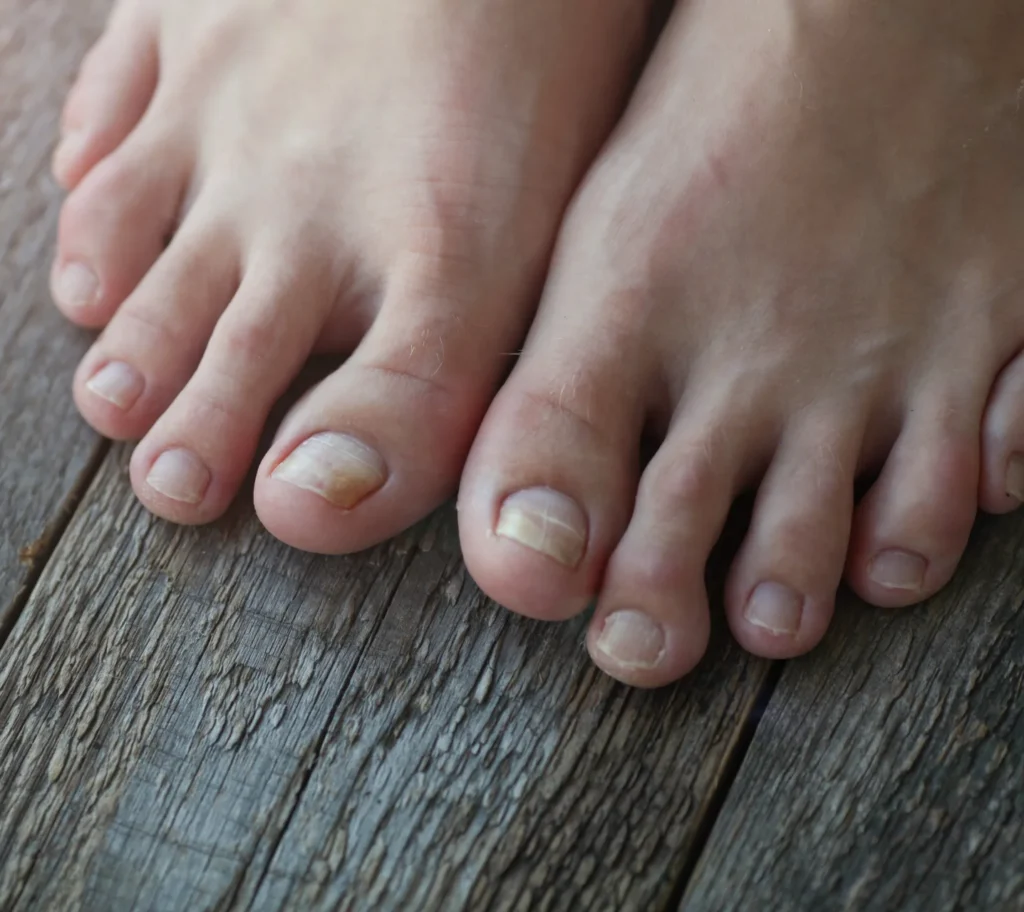
Fungal nail infection is a common condition that can cause nails to become thickened, discoloured, brittle, distorted, or difficult to cut. It most often affects toenails and can develop gradually over time.
Although not always painful, untreated fungal infections can worsen, spread to other nails or skin, and make walking or footwear uncomfortable.
At Footworks Podiatry, we offer a range of treatment options tailored to the severity of the infection, your symptoms, and your overall health.
General Podiatry Treatment — Nail Debridement
Regular podiatry care plays an important role in managing fungal nails.
Debridement involves carefully reducing the thickness and length of the affected nail using specialist instruments. This helps to:
- Relieve pressure and discomfort
- Improve the appearance of the nail
- Reduce fungal load
- Make topical treatments more effective
- Prevent the nail from catching or splitting
Ongoing maintenance appointments may be recommended, as fungal nail infections can be persistent.
Dr’s Remedy Nail Polish
We offer Dr’s Remedy nail polish, a podiatrist-recommended cosmetic option designed specifically for damaged or fungal-prone nails.
Unlike conventional nail polishes, Dr’s Remedy products are formulated with beneficial ingredients and free from many harsh chemicals. They can help:
- Improve nail appearance during treatment
- Protect weakened nails
- Provide a breathable, safer cosmetic alternative
- Support healthier nail growth
This can be a useful option for patients wishing to improve nail appearance while managing infection.
Topical Treatments
Topical antifungal treatments may be recommended, particularly in mild to moderate cases or where oral medication is not suitable.
These treatments are applied directly to the nail and surrounding skin and may include medicated solutions, lacquers, or creams. They work best when combined with regular nail reduction by a podiatrist.
Because fungal nails grow slowly, treatment typically requires consistent use over several months.
Nail Surgery (When Indicated)
In severe cases — particularly where the nail is extremely thickened, painful, repeatedly infected, or unresponsive to conservative treatment — partial or total nail removal may be considered.
Nail surgery is a minor procedure performed under local anaesthetic to numb the toe. The affected nail (or portion of nail) is removed, and a medical solution may be applied to prevent regrowth of the problematic section.
This option can provide long-term relief from symptoms and improve comfort, especially when the nail is causing ongoing pain or difficulty with footwear.
Individualised Treatment
There is no single treatment suitable for everyone. Your podiatrist will assess:
- Severity of infection
- Number of nails affected
- Symptoms and discomfort
- Medical history
- Lifestyle and treatment preferences
A personalised management plan will then be recommended to achieve the best possible outcome.
Podylas Laser Therapy
Laser treatment offers a non-invasive option for selected fungal nail infections. It uses targeted light energy to treat the infected nail without damaging surrounding healthy tissue and may be recommended as part of your treatment plan.