
services
Nail Surgery for Ingrown Toenails
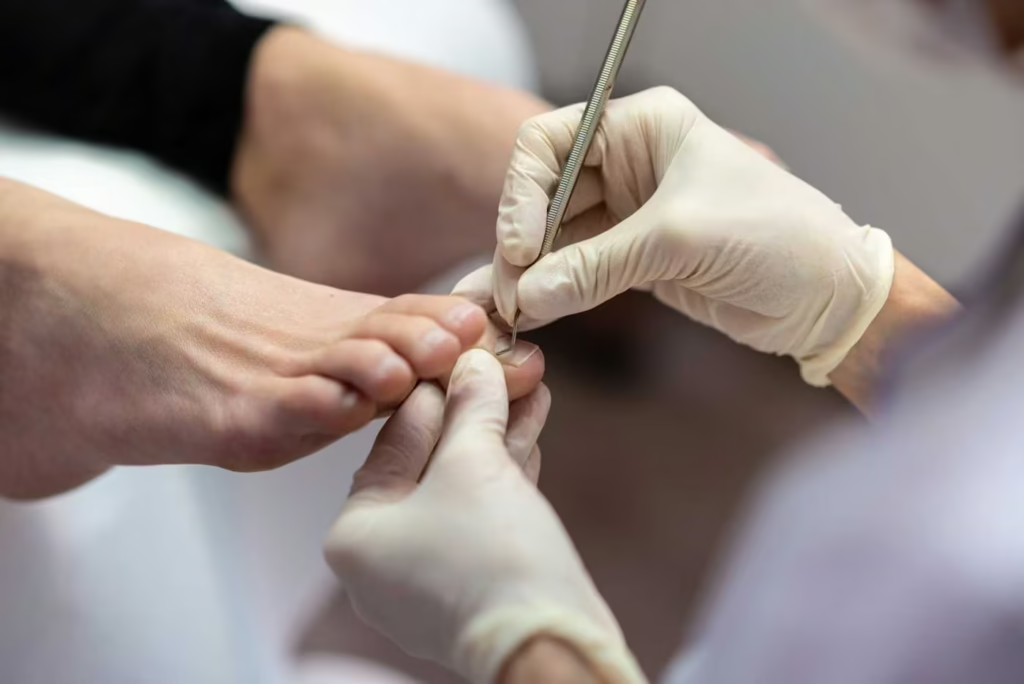
Ingrowing toenails can often be treated conservatively by carefully trimming and reshaping the nail. However, if the nail is severely ingrown, painful, or recurrent, a minor surgical procedure — known as a partial or total nail avulsion — may be recommended.
During the procedure, a local anaesthetic is used to fully numb the toe, ensuring the treatment is comfortable. The affected portion (or, in some cases, the entire nail) is carefully removed. A medical solution called phenol is then applied to the nail bed to prevent the problematic section of nail from regrowing.
Aftercare
Following the procedure, your toe will be dressed, and you will be given clear written aftercare instructions. It is normal to experience some mild discomfort, redness, and drainage for a short period as the toe heals.
Aftercare typically involves:
- Keeping the toe clean and dry for the first 24 hours
- Changing dressings as advised
- Bathing the toe in warm salt water after the initial period
- Wearing open-toed or loose footwear where possible
- Avoiding strenuous activity until healing is underway
Most patients can return to normal daily activities within a few days, although full healing usually takes several weeks.
Follow-Up & When to Seek Advice
We will advise you if a review appointment is needed to monitor healing. You should contact the clinic if you experience:
- Increasing pain, swelling, or redness
- Excessive bleeding
- Signs of infection (such as pus or spreading redness)
- Any concerns about healing
Our team is always available to provide advice and support during your recovery.
Wilde-Pedique® Nail Reconstruction
We can restore thickened and damaged toenails with Wilde-Pedique® – a flexible UV gel that moulds to your natural nail impression to reconstruct missing parts of your nail. This looks like a normal, healthy toenail while your existing nail grows naturally underneath. Wilde-Pedique® can be used to replace toenails that have been partially removed due to infection or trauma or to fix nails that have split or cracked to prevent snagging.
- No odour or discolouration – Once the nail restoration has been cured it will not change
- No chemical activators – No primer or chemical activator is used that will damage the nail or surrounding skin
- No damage to the nail – The treatment will not hinder the natural nail growth
- Non-porous – Moisture and air cannot penetrate the gel nail, preventing the spreading or development of infection
if you have any questions regarding our specialist nail treatment or wish to book an appointment at our clinic in Totnes, Contact us today on 01803 868888
Nail Surgery for Fungal Infected Toenails
When is Nail Removal Recommended?
In some cases, fungal nail infections become so advanced that the nail is extensively damaged, thickened or painful. When conservative treatments are unlikely to be successful, partial or complete nail removal may be the most effective option.
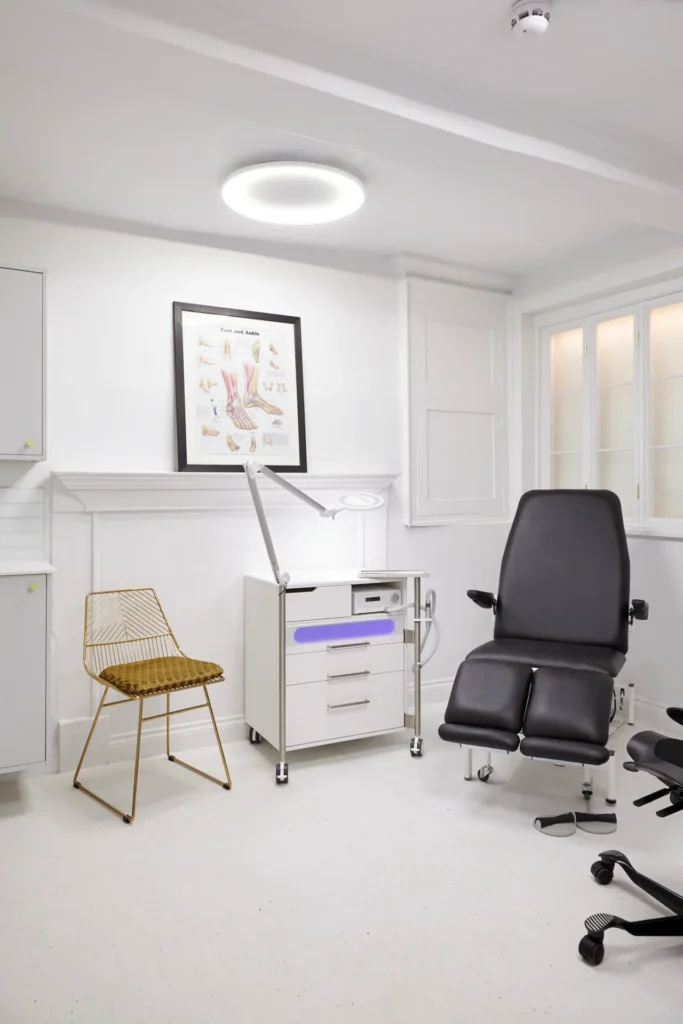
At Footworks Podiatry & Foot Health, we perform nail removal under local anaesthetic in a comfortable clinical environment.
Why We Don't Use Phenol
Unlike permanent nail removal procedures, we do not use phenol when treating fungal nail infections.
This means the nail bed is able to heal more quickly, allowing us to begin targeted antifungal treatment once the area has recovered. Our aim is to eliminate the infection while giving the nail the best possible opportunity to grow back healthy.
What to Expect
Your treatment will include:
- Comprehensive assessment and diagnosis
- Nail removal under local anaesthetic
- Detailed aftercare advice and follow-up appointments
- Advice on Topical antifungal treatment once healing has occurred
- Ongoing monitoring of healthy nail regrowth
- Advice to help reduce the risk of reinfection
The procedure is generally well tolerated, and most patients are able to return to normal daily activities within a short period, following the aftercare advice provided by your podiatrist.
A Personalised Treatment Plan
Every fungal nail infection is different. Our experienced podiatrists will recommend the most appropriate treatment based on the severity of the infection, your overall health and your long-term goals.
Where appropriate, nail removal may be combined with laser therapy, topical antifungal treatments and ongoing nail care to give you the best chance of achieving healthy, clear nail growth.


