
services
Biomechanical Assessment
We believe that understanding your lower-limb alignment, structure, strengths, and areas of weakness is fundamental to finding the most effective treatment for foot, ankle, knee, and lower-limb pain. Our comprehensive assessment provides detailed insight into how your body functions, allowing us to create a personalised treatment plan designed to achieve the best possible outcomes for you.
During the assessment, we evaluate the structure of your feet, the mobility and range of motion within your joints, and the forces acting across key areas of the foot and lower limb. This is combined with gait analysis and postural assessment to build a complete picture of how you stand, walk, and move.
Gait analysis examines your walking pattern and movement mechanics to identify factors that may be contributing to pain, instability, or inefficiency. Postural assessment looks at your overall alignment from the ground up, helping us pinpoint imbalances that may lead to discomfort, injury, or uneven wear on joints over time.
By bringing all of this information together, we can target the underlying causes of your symptoms — not just the symptoms themselves — and recommend treatments, exercises, or orthotic solutions tailored specifically to your needs.
Using exercise, movement and joint mobilisation
Once we’ve established potential underlying causes of pain or concerns, we can begin treatment using a wide range of options. Exercise rehabilitation that focuses on strengthening exercises and stretching can help relieve pain, improve poor alignment and prevent further problems. Our team is also highly experienced in mobilising the joints within the foot to target problem areas.
What to Expect During a Biomechanical Assessment
A biomechanical assessment is a detailed evaluation of how your feet and lower limbs function when you stand, walk, and move. It helps us identify the underlying causes of pain, injury, or abnormal movement patterns so we can recommend the most effective treatment for you.
Before Your Appointment
You may be asked to bring:
- Comfortable clothing that allows movement (e.g. shorts or loose trousers)
- Your everyday footwear
- Any sports or work shoes you regularly use
- Previous orthotics or insoles (if applicable)
During the Assessment
Your podiatrist will carry out a series of examinations, which may include:
Medical History & Symptoms
We will discuss your current concerns, medical history, activity levels, and any previous injuries or treatments.
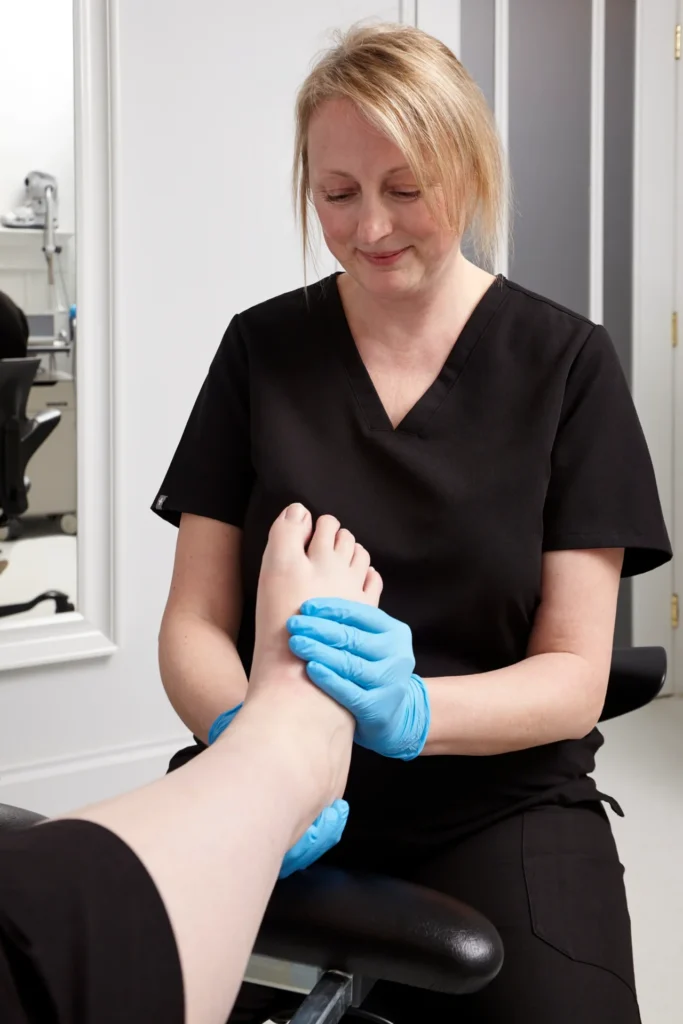
Foot Structure & Joint Assessment
Your feet and lower limbs will be examined to assess alignment, muscle strength, joint mobility, and areas of tenderness or imbalance.
Range of Movement Testing
We evaluate how your joints move and how this may be contributing to strain, instability, or pain.
Gait Analysis
You will be asked to walk so we can observe your walking pattern, foot strike, and overall movement mechanics.
Postural Assessment
We assess how you stand and how your body aligns from the feet upwards, identifying any imbalances that may affect joints and muscles over time.
Footwear Assessment
Your shoes may be checked for wear patterns and suitability for your foot type and activity.
After the Assessment
Once the evaluation is complete, your podiatrist will explain the findings and discuss recommended treatment options. These may include:
- Personalised exercises
- Foot orthoses (custom insoles)
- Footwear advice
- Activity modification
- Further treatment or follow-up appointments
Our aim is not only to relieve symptoms but to address the underlying cause and help prevent future problems.
FAQs
Your Questions Answered
How long does the musculoskeletal / biomechanical assessment take?
Will I need to carry out exercise rehabilitation at home?
How can joint mobilisation help?
If you have pain, stiffness or lack a full range of movement in your foot, foot mobilisation can provide relief and build strength. Our team uses expert techniques to help joints loosen and glide to improve movement patterns.


